About All Tours Valley Floor ToursFrom San FranciscoHiking ToursPrivate ToursTours for SeniorsGlacier Point ToursSelf-Guided Audio ToursGiant Sequoias Tours Directions Hours & Fees
Find Tours 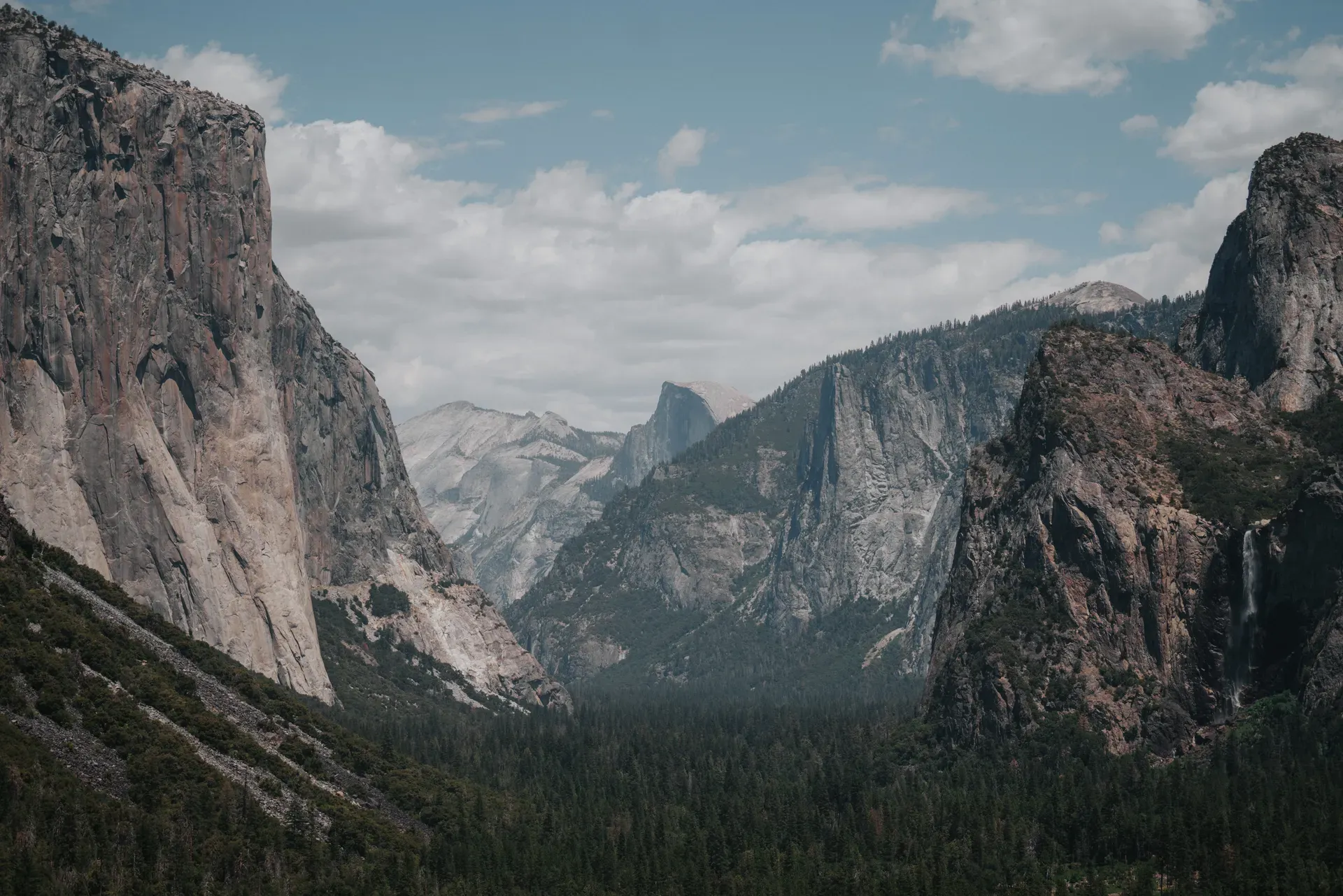
Yosemite National Park spans 747,956 acres along the central western slopes of California's Sierra Nevada. Glaciers carved its 3,000-foot granite monoliths and U-shaped valleys millions of years ago.
Yosemite National Park occupies 747,956 acres of east-central California. The Sierra Nevada mountain range cuts through the landscape, pushing elevations from near sea level on the western edge to over 13,000 feet along the eastern crest. Granite cliffs dominate the skyline, rising vertically from the pine forests. Clear streams cut through the rock, and waterfalls drop thousands of feet into the main valley. More than 94 percent of this land remains roadless wilderness, accessible only by foot or horseback.
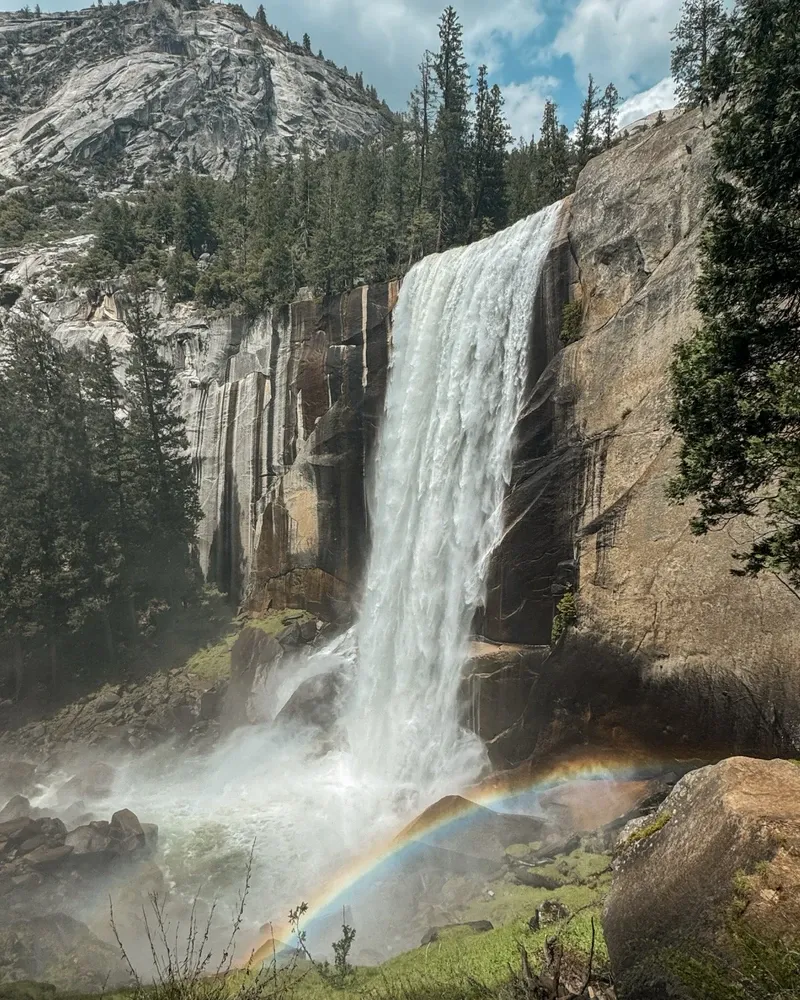
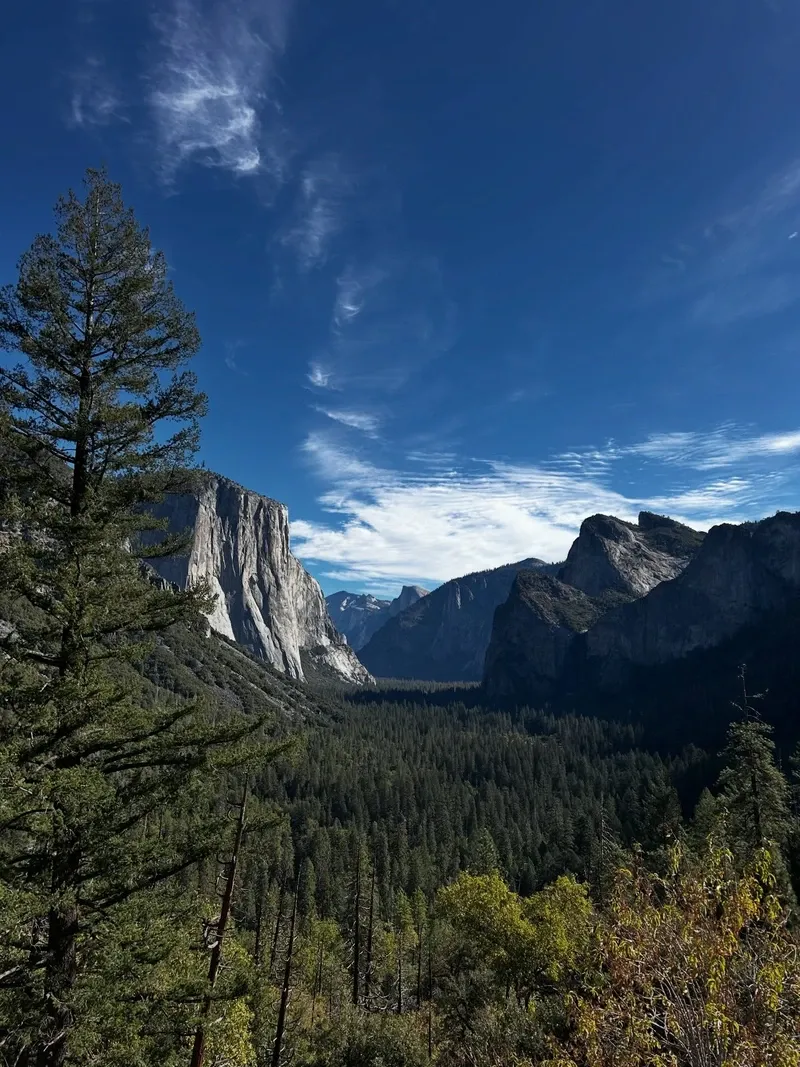
Visitors stand at Tunnel View to see El Capitan, Bridalveil Fall, and Half Dome framing the valley floor. The spray from Yosemite Falls hits your face 20 meters before you reach the base on the paved lower trail. Giant sequoias in the Mariposa Grove stretch hundreds of feet into the air, their trunks wider than a standard road lane. The Grizzly Giant, one of the oldest trees in the grove, features a massive branch thicker than most tree trunks. Hikers on the Mist Trail experience the raw power of the Merced River as it roars over Vernal and Nevada Falls.
High-country snowmelt dictates the park's seasonal rhythm. Late spring and early summer bring the heaviest water flow, making May and June the optimal months for waterfall viewing. By late August, major cascades like Yosemite Falls often reduce to a trickle or dry up completely. Winter conditions bring ice and snow, shutting down high-elevation routes like Glacier Point Road.
Crowds overwhelm the valley floor from April through October. Traffic jams frequently bring cars to a standstill near major trailheads, and finding parking after 9:00 AM requires circling lots for hours. You can bypass the worst congestion by taking the YARTS regional bus from Merced directly into the park for $44 round-trip.
The Ahwahneechee people inhabited the Yosemite Valley region for thousands of years before European contact. They established permanent villages along the Merced River, utilizing the valley's abundant acorns, wildlife, and native plants for sustenance. Their controlled burns cleared underbrush, promoting the growth of black oak trees and preventing catastrophic wildfires. This deliberate land management shaped the open, park-like meadows that early European explorers later documented. The California Gold Rush in the mid-19th century brought thousands of miners into the Sierra Nevada, leading to violent conflicts and the forced removal of many indigenous residents by state-sponsored militias.
President Abraham Lincoln signed the Yosemite Grant on June 30, 1864, in the midst of the Civil War. This landmark legislation transferred Yosemite Valley and the Mariposa Grove of giant sequoias to the State of California as a public trust. The act marked the first time the federal government protected land specifically for public use and preservation. It laid the legal and philosophical groundwork for the entire national park system. State management, however, struggled to prevent commercial exploitation, illegal logging, and overgrazing in the surrounding high-country meadows.
Naturalist John Muir and magazine editor Robert Underwood Johnson lobbied Congress to protect the vulnerable alpine meadows from domestic sheep grazing. Their extensive writing campaigns succeeded on October 1, 1890, when Congress established Yosemite as America's third national park, setting aside over 1,500 square miles of surrounding wilderness. The state-controlled valley and grove finally merged under federal jurisdiction in 1906 after Muir personally guided President Theodore Roosevelt on a camping trip near Glacier Point. The newly formed National Park Service took over management in 1916, introducing early wildlife programs and hiring the first female ranger, Clare Marie Hodges, in 1917.
Today, park officials balance strict environmental preservation with managing 4.2 million annual visitors. Conservationists focus on restoring the Merced River corridor, eradicating invasive plant species, and protecting the giant sequoias from climate-driven drought. Wildfires frequently force road closures and blanket the valley in thick smoke during late summer. Check the official NPS app for real-time air quality alerts and active fire maps before driving up Highway 140.
Granitic rock formations define Yosemite's dramatic landscape. These massive structures formed deep underground 215 million years ago when the Farallon Plate subducted beneath the North American Plate. Magma cooled slowly beneath the earth's surface, creating a vast batholith of solid, interlocking granite crystals. Tectonic forces later uplifted the entire Sierra Nevada block, exposing this dense rock to the elements. Over millions of years, the overlying sedimentary rock eroded away, revealing the gray and white granite domes visible today.
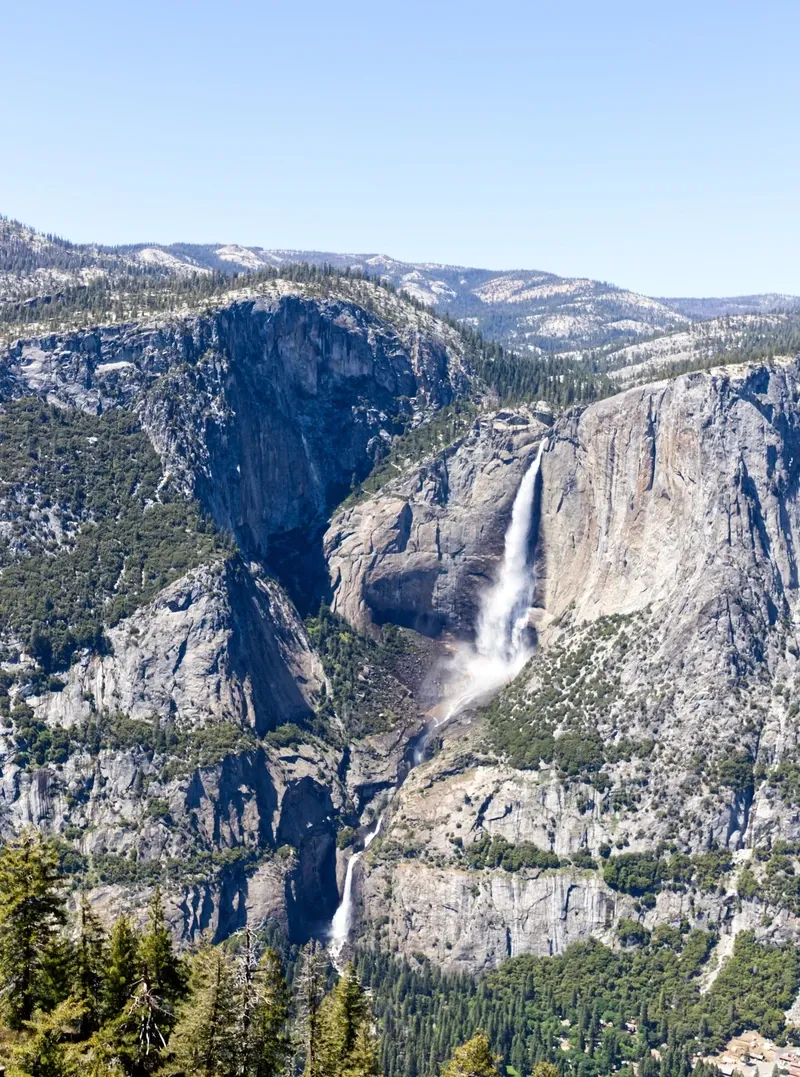
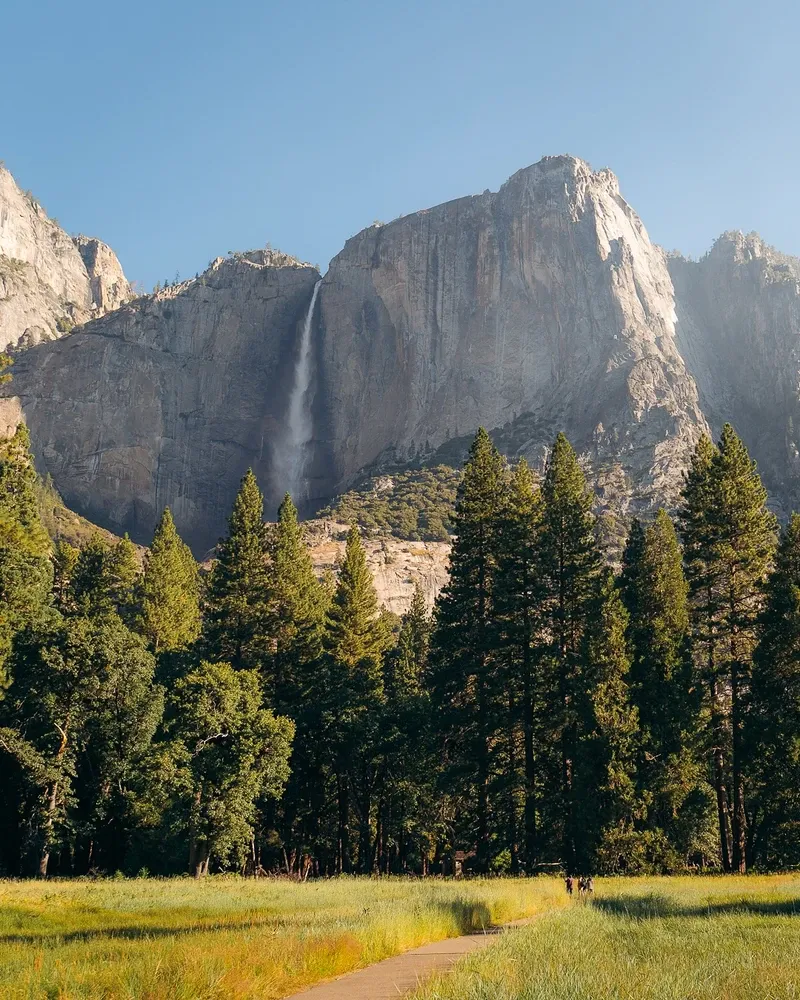
Glaciers carved the sharp V-shaped river canyons into the broad U-shaped valleys that characterize the park's lower elevations. Ice sheets thousands of feet thick scoured the granite, leaving behind sheer vertical faces like El Capitan, which rises 3,000 feet straight up from the valley floor. The retreating ice also created hanging valleys where tributary glaciers failed to cut as deeply as the main glacier. Water flowing from these elevated side canyons now plunges over the cliffs, forming North America's tallest waterfalls. Yosemite Falls drops 2,425 feet in three distinct sections: the Upper Fall, the middle cascades, and the Lower Fall.
The high country features mirror-like alpine lakes, expansive meadows, and jagged peaks. Tioga Road climbs past 9,000 feet, offering access to Tuolumne Meadows and Tenaya Lake. Visitors can swim or paddle along the pristine, granite-rimmed shores of Tenaya Lake during the brief summer window. Snow closes this trans-Sierra route from November through late May, cutting off eastern access to the park.
Ice and freezing temperatures make winter travel hazardous across all elevations. Black ice forms rapidly on shaded sections of the valley loop road. Drivers must carry tire chains in their vehicles between November and March, as rangers frequently set up mandatory chain control checkpoints on the approach roads.
Yosemite holds profound spiritual importance for the Ahwahneechee and other affiliated Native American tribes. The valley's monoliths, waterfalls, and meadows feature prominently in indigenous creation stories and centuries-old oral traditions. Contemporary tribal members continue to practice traditional ceremonies, gather native plants for basket weaving, and maintain deep cultural ties to their ancestral homelands within the park boundaries. The reconstructed Indian Village of Ahwah behind the Yosemite Museum demonstrates traditional bark houses and acorn storage structures, providing a physical link to these enduring traditions.
The landscape also shaped the American conservation movement through literature and visual arts. John Muir's impassioned essays about the Sierra Nevada convinced a growing, industrialized nation to value wilderness over resource extraction. Ansel Adams captured the stark contrast of Half Dome and winter storms on black-and-white film, cementing the park's visual identity in the public consciousness. His high-contrast photographs still hang in galleries worldwide, defining how millions of people perceive the American West.
Local communities depend heavily on the 4.2 million tourists who visit the region annually. Towns like Mariposa, Oakhurst, and Groveland base their economies almost entirely on lodging, guiding services, and restaurant operations catering to park visitors. The influx of international tourists sustains thousands of local jobs but also strains regional infrastructure during peak summer months.
Federal jurisdiction governs all activities within the park boundaries. This creates specific legal realities for visitors from states with different local regulations. Federal laws prohibit marijuana possession entirely, despite California's permissive state laws regarding cannabis. Rangers issue federal citations for drug violations and improper food storage, so leave all cannabis products at home and lock your coolers in the provided bear boxes before hiking.
Clare Marie Hodges became the first female park ranger in 1917.
The Ahwahneechee people lived in the valley for thousands of years before European arrival.
Abraham Lincoln protected Yosemite in 1864, during the middle of the Civil War.
Yosemite Falls drops 2,425 feet, making it the tallest waterfall in North America.
El Capitan features a sheer 3,000-foot vertical granite face.
The park's granite formed 215 million years ago deep underground.
Launching or landing unmanned aircraft is a federal offense anywhere in the park.
No, vehicle reservations are not required for entry in 2026. You simply pay the $35 entrance fee at the gate.
The standard entrance fee is $35 per vehicle, $30 per motorcycle, and $20 per pedestrian or cyclist. Non-US residents pay an additional $100 per person.
The park remains open 24 hours a day, 365 days a year. The Hetch Hetchy Entrance Station is the only exception, closing at sunset.
Dogs are permitted but must remain on a leash at all times. They can walk on paved trails, in campgrounds, and in parking lots, but dirt hiking trails are strictly off-limits.
Bear spray is illegal and strictly prohibited inside the park. You must use designated metal bear lockers to store your food and scented items instead.
Late spring and early summer offer the highest water volume. May and June provide the most impressive displays before many falls dry up in August.
The YARTS regional bus runs from Merced directly into the valley. You can connect to Merced via Amtrak trains from the San Francisco Bay Area.
Food can stay in a locked vehicle with rolled-up windows during daylight hours. At night, you must move all food and scented items into a locked, bear-proof metal locker.
Operating drones is completely banned on all lands and waters within the park. Rangers enforce this rule to protect wildlife and the natural soundscape.
Yes, you must carry tire chains in your vehicle from November through March. Rangers frequently require them on icy mountain roads, even for four-wheel-drive vehicles.
Browse verified tours with free cancellation and instant confirmation.
Find Tours